Updated 23 November 2026. First published June 2024.
Retrieval practice, spaced repetition and interleaving: the science of learning has advanced significantly. Here is what the evidence tells us about how students actually learn best.
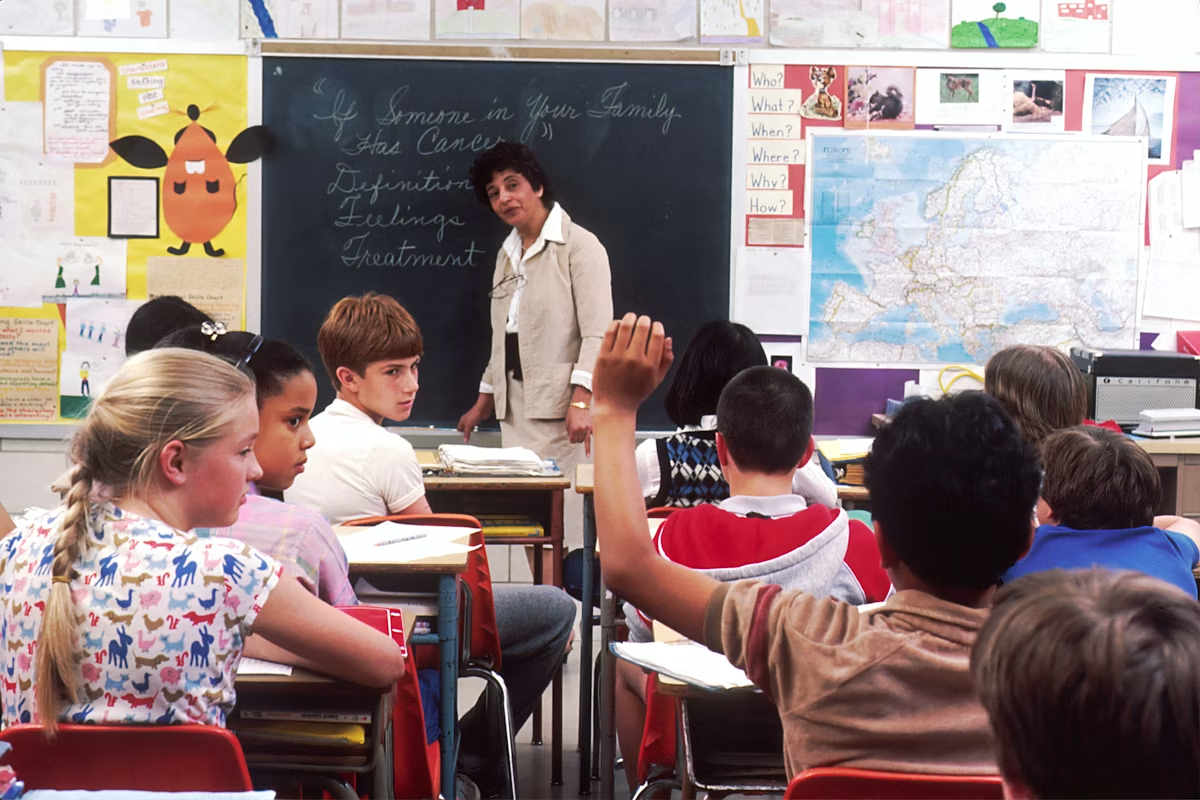
A pupil closes a science book after reading a page three times. Every sentence looks familiar. Tomorrow, the same pupil must explain the water cycle on a blank sheet of paper. Those two tasks ask different things of memory. A revision routine can make room for both understanding the explanation and bringing it back unaided.
Close the book and reconstruct the idea
Roediger and Karpicke asked students to study passages and either reread them or try to recall them. Rereading had an advantage when the final test followed five minutes later. After two days or a week, students who had practised recall remembered more. The experiment used prose passages, so its result speaks most directly to remembering material of that kind. See the original retrieval-practice study.
After reading about evaporation, close the book, sketch what happens to a puddle and explain where the water goes. Then reopen the book, check the explanation and correct it. A parent can ask “Which part did you have to look up?” That makes the next revision target specific, even when the parent is unfamiliar with the subject.
Return after a gap
Cepeda and colleagues varied the time between learning facts, reviewing them and taking a final test. The most effective review gap depended on how long learners needed to remember the material. For an ordinary homework routine, one workable starting point is to recall an idea the next day and try it again the following week. Adjust the interval in light of what the learner can still explain. Read the spacing experiment.
Mix problems once the methods are familiar
When every exercise follows a lesson on area, the page heading gives away the method. Mix a fencing problem with a tiling problem and the learner must decide whether perimeter or area is relevant. Rohrer and Taylor found that college students who practised mixed mathematics problems performed better on a delayed test than those who practised in blocks by type. See the mathematics practice experiments.
Begin by teaching each method with an example. Later, mix a small set and ask the learner to explain why each method fits. Keep a note of questions that were initially missed and answered independently on a later day. That record gives a family a clearer sign of progress than the number of minutes spent with an open book.
Study for the explanation, not just the familiar sentence
A learner can recite that evaporation is a change of state and still struggle to explain why a wet shirt dries on a cloudy day. Close the book and draw the journey of one drop of water. Then answer a different question: why might a shirt dry more slowly in a crowded room? Only after trying should the learner reopen the text, check the mechanism and correct the drawing. The error is useful privately: it tells the learner where to spend the next five minutes. It is not a reason to give a low-stakes practice attempt a permanent grade.
In experiments with science texts, Karpicke and Blunt found that retrieval practice benefited subsequent comprehension and inference, not only recall of wording. It does not follow that drawing a concept map is a poor strategy: a learner can draw one from memory and then check it. In mathematics, Rohrer, Dedrick and Burgess investigated interleaving different problem types. Mixing tasks obliges learners to choose a strategy rather than taking it from the heading. Introduce a new method clearly first; random variety without preparation is not the point.
A revision routine without a smartphone
- Today: fold a sheet in half. Write one explanatory question on the left and an answer from memory on the right. Correct it in another colour using the book.
- Two days later: answer without seeing that correction, then solve a neighbouring example that needs a different approach. Say aloud how you knew which approach to use.
- Next week: try a fresh context. If you remember the words but cannot explain the new case, compare a worked example with your attempt and try again later. The intervals are a practical starting point, not a universal optimum.
Discuss with a colleague: When did you last check what you could produce, rather than what you recognised?
References
- the original retrieval-practice study
- the spacing experiment
- the mathematics practice experiments
- Karpicke & Blunt (2011). Retrieval practice produces more learning than elaborative studying with concept mapping. Science.
- Rohrer, Dedrick & Burgess (2014). The benefit of interleaved mathematics practice is not limited to superficially similar kinds of problems.